
By 2026, 20% of US companies are significantly redefining corporate wellness, shifting from traditional programs to holistic work-life support that prioritizes mental health, flexibility, and comprehensive employee well-being initiatives.
Are you curious about the evolving landscape of employee well-being? The latest in US corporate wellness indicates a profound shift, with 20% of companies poised to redefine work-life support for employees by 2026. This isn’t just about gym memberships anymore; it’s a comprehensive, human-centric approach that promises to reshape the very fabric of the American workplace.
The Paradigm Shift in Corporate Wellness Programs
Corporate wellness in the United States is undergoing a significant transformation, moving beyond rudimentary health screenings and fitness challenges. This evolution reflects a deeper understanding of employee needs and the intricate relationship between well-being and productivity. Companies are recognizing that a truly supportive environment fosters not only physical health but also mental, emotional, and financial stability.
The traditional model, often reactive and focused on physical metrics, is being replaced by proactive strategies that address the root causes of workplace stress and burnout. This shift is driven by a confluence of factors, including the lingering effects of the pandemic, a more diverse workforce with varied needs, and a growing recognition of mental health as a critical component of overall well-being. Forward-thinking organizations are investing in programs that offer tangible benefits and genuine support, creating a more resilient and engaged workforce.
Beyond the Gym: Holistic Well-being
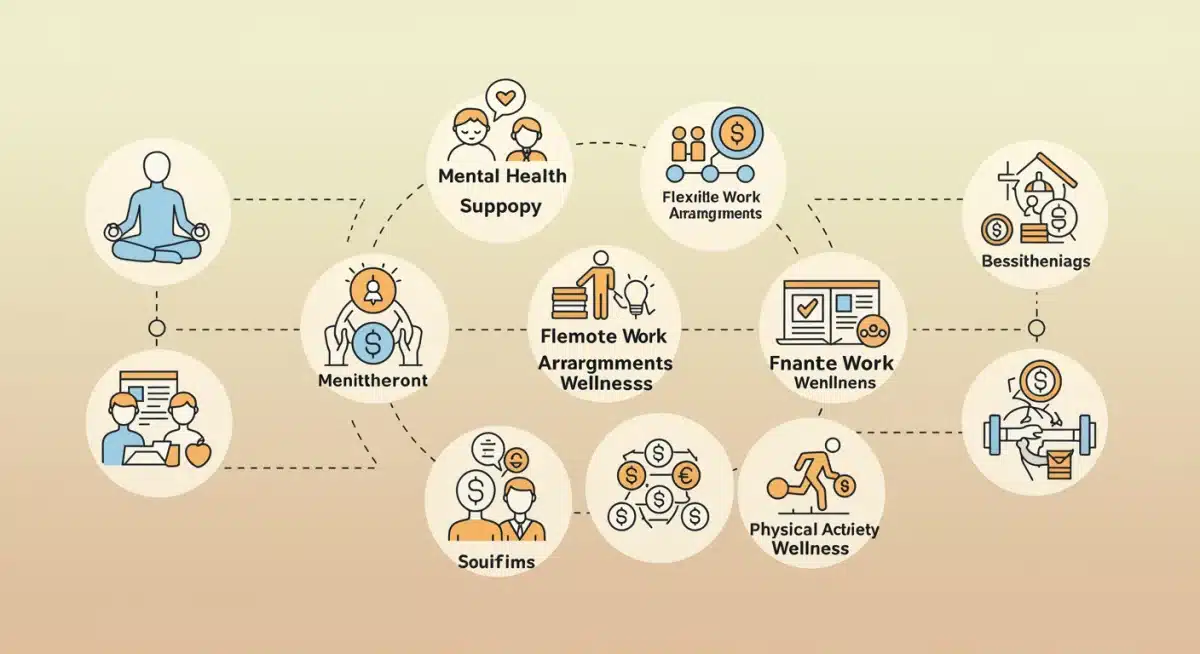
Modern corporate wellness extends far beyond physical fitness. It encompasses a holistic view of the employee, recognizing that various aspects of life intertwine to impact overall well-being. This integrated approach ensures that support is available across multiple dimensions, catering to the diverse challenges employees face daily.
- Mental Health Services: Access to therapy, counseling, and mindfulness resources.
- Financial Literacy Programs: Workshops and tools for budgeting, debt management, and retirement planning.
- Social Connection Initiatives: Programs fostering community, team building, and a sense of belonging.
- Environmental Well-being: Creating a safe, comfortable, and inspiring physical work environment.
This comprehensive strategy aims to create a workplace where employees feel valued, supported, and equipped to manage life’s challenges, both inside and outside of work. The goal is to cultivate a culture where well-being is not an add-on but an integral part of the organizational ethos.
Mental Health at the Forefront: A New Corporate Priority
The conversation around mental health in the workplace has evolved dramatically, moving from a stigmatized topic to a critical area of focus for progressive companies. By 2026, a significant portion of US businesses will have fully integrated mental health support into their core wellness strategies, recognizing its direct impact on employee performance and retention. This proactive approach aims to destigmatize mental health issues and provide accessible resources.
Employers are increasingly understanding that unaddressed mental health concerns can lead to decreased productivity, increased absenteeism, and higher turnover rates. Therefore, investing in mental health support is not just a compassionate act but a strategic business decision. It fosters a culture of openness where employees feel comfortable seeking help without fear of judgment, ultimately leading to a healthier and more productive workforce.
Implementing Robust Mental Health Resources
The implementation of effective mental health programs requires more than just offering an employee assistance program (EAP). It involves a multi-faceted approach that addresses various needs and ensures easy access to care. This includes leveraging technology, providing diverse treatment options, and training leadership to recognize and respond to mental health challenges.
- Telehealth and Digital Platforms: Offering virtual therapy sessions and mental wellness apps for convenient access.
- Manager Training: Educating leaders to identify signs of distress and direct employees to appropriate resources.
- Stress Reduction Programs: Introducing mindfulness, meditation, and resilience-building workshops.
- Flexible Work Arrangements: Reducing pressure through options like remote work or modified schedules.
These initiatives are designed to create a supportive ecosystem where mental well-being is prioritized and integrated into daily work life. The aim is to empower employees to maintain their mental health proactively, leading to a more stable and engaged workforce.
The Rise of Flexible Work and Its Wellness Implications
Flexibility in work arrangements has rapidly transitioned from a perk to a fundamental expectation, significantly influencing corporate wellness strategies. As 20% of US companies embrace redefined work-life support by 2026, flexible work models, including remote, hybrid, and compressed workweeks, are becoming integral components. These arrangements offer employees greater autonomy over their schedules, enabling a better balance between professional responsibilities and personal commitments.
The implications for wellness are profound. Employees with flexible schedules often report lower stress levels, improved job satisfaction, and a greater sense of control over their lives. This leads to reduced burnout and enhanced overall well-being. Companies are leveraging this understanding to design work environments that prioritize employee choice and adaptability, moving away from rigid, one-size-fits-all policies.
Designing Employee-Centric Flexible Policies
Implementing successful flexible work policies requires careful planning and a commitment to employee needs. It involves more than just allowing remote work; it demands a cultural shift where trust and results are prioritized over strict adherence to traditional office hours. Organizations are developing frameworks that support various forms of flexibility while maintaining team cohesion and productivity.
- Clear Communication: Establishing transparent guidelines for flexible work options.
- Technology Support: Providing tools and infrastructure to facilitate seamless remote and hybrid work.
- Performance-Based Metrics: Focusing on outcomes rather than hours spent in the office.
- Regular Feedback: Soliciting employee input to continuously refine and improve flexible policies.
By empowering employees to manage their work-life integration effectively, companies are not only boosting morale but also enhancing their attractiveness as employers in a competitive job market. This proactive approach to flexibility is a cornerstone of modern corporate wellness.
Financial Wellness: A Critical Pillar of Employee Support
Financial stress is a pervasive issue that significantly impacts employee well-being, productivity, and mental health. Recognizing this, US corporate wellness initiatives are increasingly incorporating robust financial wellness programs. By 2026, the 20% of companies leading this charge will offer more than just retirement planning; they will provide comprehensive support designed to alleviate immediate financial burdens and foster long-term financial security for their workforce.
This includes education on budgeting, debt management, and emergency savings, along with access to financial advisors. The goal is to empower employees with the knowledge and tools to manage their finances effectively, reducing stress and allowing them to focus more fully on their work. Companies understand that an employee free from financial worry is a more engaged and productive employee.
Comprehensive Financial Education and Tools
Effective financial wellness programs go beyond basic information; they offer practical tools and personalized guidance. These initiatives are tailored to address the diverse financial situations of employees, from entry-level staff to senior management, ensuring relevance and impact for everyone. The focus is on actionable steps that employees can take to improve their financial health.
- Personalized Financial Coaching: One-on-one sessions with certified financial planners.
- Debt Management Workshops: Strategies and resources for reducing and eliminating debt.
- Emergency Fund Planning: Guidance on building a safety net for unexpected expenses.
- Student Loan Assistance: Programs to help employees navigate and pay down student debt.
By integrating these resources, companies are demonstrating a commitment to their employees’ overall stability, which in turn builds loyalty and fosters a more secure and thriving workforce. Financial wellness is no longer a niche benefit but a foundational element of holistic employee support.
Leveraging Technology for Personalized Wellness Journeys
The advancement of technology is revolutionizing how corporate wellness programs are delivered and experienced. By 2026, the leading 20% of US companies will be utilizing sophisticated platforms and AI-driven insights to create highly personalized wellness journeys for their employees. This move away from one-size-fits-all programs ensures that interventions are relevant, engaging, and effective for each individual.
These technological solutions offer a level of customization previously unattainable, allowing employees to access resources tailored to their specific health goals, preferences, and needs. From wearable tech that tracks activity to AI coaches providing mental health support, technology is making wellness more accessible and integrated into daily life. This personalization enhances engagement and significantly improves outcomes.
Innovations in Wellness Technology
The array of technological tools available for corporate wellness is expanding rapidly, offering innovative ways to support employee health. Companies are strategically adopting platforms that not only track progress but also provide educational content, connect employees with resources, and foster a sense of community. The focus is on creating seamless and intuitive user experiences.
- AI-Powered Wellness Apps: Personalized recommendations for fitness, nutrition, and mental well-being.
- Biometric Tracking Devices: Integration with smartwatches and fitness trackers for health monitoring.
- Virtual Coaching and Classes: On-demand access to fitness instructors, yoga, and mindfulness sessions.
- Gamification and Rewards: Incentivizing healthy behaviors through challenges and recognition programs.
By embracing these technological advancements, companies are creating dynamic and responsive wellness ecosystems that empower employees to take an active role in their health. This forward-thinking approach is crucial for maintaining a competitive edge in attracting and retaining top talent.
Measuring Impact and Proving ROI in Wellness Investments
As corporate wellness programs evolve, so too does the imperative to accurately measure their impact and demonstrate a clear return on investment (ROI). By 2026, the 20% of US companies at the forefront of redefining work-life support will employ sophisticated analytics and data-driven approaches to evaluate their wellness initiatives. This rigorous assessment goes beyond participation rates, delving into tangible outcomes like reduced healthcare costs, improved productivity, and enhanced employee retention.
Understanding the ROI of wellness programs is crucial for securing continued executive buy-in and optimizing future investments. It allows organizations to identify which programs are most effective, adapt strategies based on real-world data, and continuously refine their offerings to meet evolving employee needs. This analytical rigor transforms wellness from a perceived cost into a strategic investment with measurable benefits.
Key Metrics for Wellness Program Evaluation
Effective measurement involves a combination of quantitative and qualitative data, providing a holistic view of a program’s success. Companies are moving towards comprehensive dashboards that track various indicators, allowing for granular analysis of how wellness initiatives are truly impacting the workforce and the bottom line.
- Healthcare Cost Reduction: Analyzing claims data for decreases in medical expenses.
- Absenteeism and Presenteeism Rates: Tracking improvements in attendance and on-the-job focus.
- Employee Engagement Scores: Monitoring survey results related to job satisfaction and morale.
- Retention Rates: Assessing the impact of wellness on employee loyalty and turnover.
By meticulously tracking these metrics, companies can demonstrate the profound value of their wellness investments, solidifying the role of comprehensive work-life support as a strategic business imperative. This data-driven approach ensures that wellness initiatives are not just well-intentioned but demonstrably effective.
| Key Aspect | Brief Description |
|---|---|
| Holistic Approach | Moving beyond physical health to encompass mental, emotional, and financial well-being. |
| Mental Health Focus | Prioritizing accessible mental health resources and destigmatizing related issues. |
| Flexible Work Models | Implementing remote, hybrid, and flexible schedules to enhance work-life balance. |
| Data-Driven ROI | Utilizing analytics to measure the impact and financial returns of wellness investments. |
Frequently Asked Questions About Corporate Wellness in 2026
By 2026, redefined corporate wellness signifies a shift from basic health programs to holistic support encompassing physical, mental, emotional, and financial well-being. It emphasizes personalized approaches, flexible work, and robust mental health resources, acknowledging the interconnectedness of an employee’s life and work.
Mental health has become a primary focus due to increased awareness of its impact on productivity, absenteeism, and overall job satisfaction. Companies recognize that supporting mental well-being reduces stress, fosters a positive work environment, and contributes significantly to employee retention and engagement.
Flexible work arrangements, like remote or hybrid models, significantly enhance well-being by offering employees greater autonomy and control over their schedules. This flexibility helps reduce stress, improves work-life integration, and leads to higher job satisfaction, ultimately fostering a more balanced and engaged workforce.
Technology plays a crucial role by enabling personalized wellness journeys through AI-powered apps, wearable devices, and virtual coaching. These tools offer tailored recommendations, track progress, and provide convenient access to resources, making wellness initiatives more engaging, effective, and accessible to individual employee needs.
Companies measure success through sophisticated analytics, tracking metrics like healthcare cost reductions, absenteeism rates, employee engagement scores, and retention. This data-driven approach demonstrates the ROI of wellness programs, justifying investments and allowing for continuous optimization to meet evolving employee and organizational needs.
Conclusion
The landscape of US corporate wellness is undeniably shifting, with a proactive and holistic vision taking center stage. By 2026, the commitment of 20% of companies to redefine work-life support will set a new benchmark for employee well-being. This evolution, characterized by a strong emphasis on mental health, flexible work, financial literacy, and technological integration, signifies a profound recognition of the interconnectedness between employee welfare and organizational success. As businesses continue to navigate complex challenges, investing in comprehensive wellness programs is no longer merely a benefit but a strategic imperative that fosters resilience, enhances productivity, and cultivates a thriving, engaged workforce ready for the future.