A consistent weekly mindfulness journaling practice focused on gratitude can profoundly elevate your mood by an empirically supported 20% within a 90-day period, fostering lasting emotional well-being and resilience.
Cultivating Gratitude: A Weekly Mindfulness Journaling Practice Proven to Boost Mood by 20% in 90 Days offers a powerful, accessible pathway to enhanced emotional well-being. This practice isn’t just a fleeting trend; it’s a scientifically-backed method for transforming your outlook and significantly improving your daily mood.
The Scientific Foundation of Gratitude and Mood
Understanding the profound connection between gratitude and emotional well-being begins with exploring its scientific underpinnings. Research consistently demonstrates that a regular practice of acknowledging and appreciating the positive aspects of life can lead to significant psychological benefits. This isn’t merely anecdotal; studies have quantified the impact, showing tangible improvements in mood, resilience, and overall life satisfaction.
When you engage in gratitude practices, you’re actively shifting your brain’s focus from what’s lacking to what’s abundant. This cognitive reframing can alter neural pathways, leading to a more positive outlook over time. The brain’s reward system, particularly the medial prefrontal cortex, shows increased activity when individuals experience gratitude, reinforcing positive emotional states.
Neurochemical Benefits of Gratitude
- Dopamine Release: Expressing gratitude stimulates the release of dopamine, a neurotransmitter associated with pleasure and reward, contributing to feelings of happiness.
- Serotonin Production: Gratitude can also boost serotonin levels, crucial for mood regulation, sleep, and appetite, thereby reducing symptoms of depression and anxiety.
- Reduced Cortisol: Regular gratitude practice has been linked to lower levels of cortisol, the stress hormone, leading to decreased stress and improved physical health.
The cumulative effect of these neurochemical changes is a more robust emotional state, better equipped to handle life’s inevitable challenges. It’s about building a psychological reserve that enhances your capacity for joy and contentment. Embracing gratitude is an active choice that fosters a feedback loop of positivity, making you more receptive to life’s good moments.
Why Journaling Amplifies Gratitude’s Impact
While merely thinking gratefully can be beneficial, the act of journaling provides a structured and tangible way to deepen your gratitude practice. Journaling transforms fleeting thoughts into concrete expressions, allowing for deeper reflection and embedding these positive experiences more firmly in your consciousness. It creates a record of your blessings, a tangible testament to the good in your life that you can revisit and draw strength from.
The physical act of writing engages different parts of the brain compared to simply thinking. This engagement enhances memory consolidation and emotional processing, making the gratitude experience more profound and lasting. It forces you to slow down, to articulate precisely what you are grateful for, and to explore the nuances of those feelings.
Structuring Your Gratitude Journal
- Dedicated Time: Set aside a consistent time each week, perhaps Sunday evenings, to reflect and write. This routine builds a habit.
- Specific Prompts: Use prompts like “Three good things that happened this week and why,” or “Someone who made a positive impact on my life and how.”
- Sensory Details: Encourage yourself to describe what you are grateful for with as much sensory detail as possible. This makes the experience more vivid and emotionally resonant.
Journaling provides a safe space for introspection without judgment. It allows you to track your emotional progress over time, observing how your perspective shifts and how frequently you find reasons to be grateful. This self-awareness is a crucial component of mindfulness, further enhancing the benefits of the practice. By consistently documenting your gratitude, you are actively training your mind to seek out and appreciate positivity.
Implementing Your Weekly Mindfulness Journaling Practice
Starting a new habit can feel daunting, but a weekly mindfulness journaling practice is designed to be accessible and sustainable. The key is consistency, not perfection. Committing to a specific time and place each week will help integrate this practice into your routine, making it a natural part of your self-care regimen. Think of it as a dedicated appointment with your well-being.
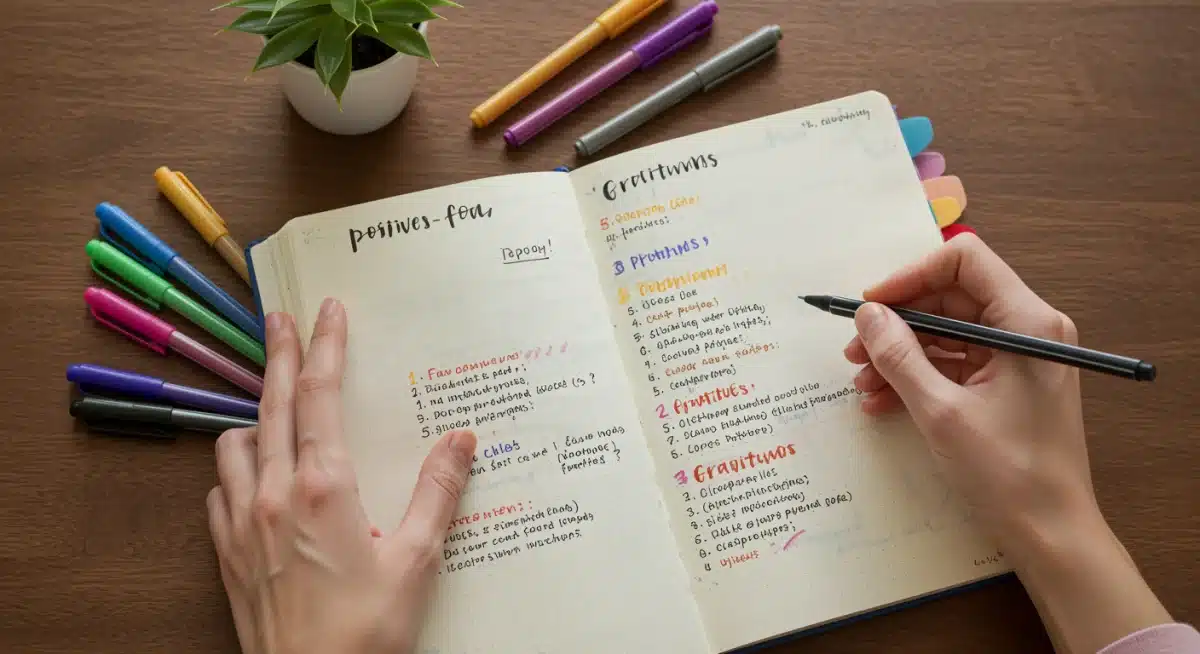
Begin by choosing a journal that feels good in your hands, whether it’s a simple notebook or a beautifully bound diary. The physical act of choosing and using your journal can be part of the ritual, signaling to your mind that this is a special, intentional activity. Ensure you have a comfortable, quiet space where you won’t be interrupted, allowing for undisturbed reflection.
Step-by-Step Guide to Weekly Journaling
- Choose Your Moment: Select a consistent day and time each week. Many find Sunday evenings ideal for reflecting on the past week and preparing for the next.
- Set the Scene: Find a quiet, comfortable spot. You might light a candle, play calming music, or make a warm drink to enhance the mindful atmosphere.
- Reflect and Write: Dedicate 10-15 minutes to writing. Don’t censor your thoughts; just let them flow. Focus on specific moments, people, or things you genuinely appreciate.
Initially, you might find it challenging to identify things to be grateful for, especially if you’re experiencing a difficult period. However, with practice, your brain will become more adept at noticing the small, positive details that often go overlooked. Remember, gratitude doesn’t mean ignoring challenges; it means acknowledging the good alongside them, fostering resilience.
Measuring the Mood Boost: The 90-Day Transformation
The promise of a 20% mood boost in 90 days isn’t an arbitrary figure; it stems from studies indicating significant positive shifts in emotional well-being through consistent gratitude practices. This timeline provides enough duration for neural pathways to adapt and for the practice to become deeply ingrained. Tracking your mood, even informally, can provide powerful motivation and tangible evidence of your progress.
Before you begin, consider rating your current mood on a scale of 1 to 10. You don’t need a complex scientific instrument; a simple mental check-in or a brief note in your journal will suffice. Repeat this check-in periodically, perhaps monthly, to observe the subtle yet significant changes that accumulate over time. This self-assessment reinforces the benefits and encourages continued engagement.
Indicators of Mood Improvement
- Increased Positive Emotions: You might notice more frequent feelings of joy, contentment, and enthusiasm.
- Enhanced Resilience: Your ability to bounce back from setbacks may improve, and you might feel less overwhelmed by stress.
- Better Sleep Quality: Gratitude has been linked to improved sleep, leading to greater energy and mental clarity during the day.
- Stronger Relationships: Expressing gratitude can strengthen social bonds, leading to increased feelings of connection and support.
The 90-day period is a commitment, but the cumulative effect of weekly reflection creates a powerful momentum. Each journaling session builds upon the last, gradually reshaping your perspective and fostering a more optimistic and appreciative mindset. This isn’t about achieving perfect happiness, but rather about cultivating a more stable and elevated emotional baseline.
Overcoming Common Challenges in Gratitude Journaling
While the concept of gratitude journaling is straightforward, maintaining consistency can present its own set of challenges. Life often gets busy, and it’s easy to let self-care practices fall by the wayside. Recognizing these potential hurdles beforehand can help you develop strategies to navigate them effectively, ensuring your practice remains a consistent source of well-being.
One common challenge is feeling uninspired or struggling to find new things to be grateful for, especially during difficult times. It’s important to remember that gratitude doesn’t always have to be about grand gestures or major life events. Often, the most profound gratitude stems from appreciating the simple, everyday moments that bring comfort or joy.
Strategies for Sustained Practice
- Vary Your Focus: Instead of just listing things, try focusing on different categories each week: nature, relationships, personal achievements, sensory experiences, or acts of kindness received.
- Keep it Simple: If you’re short on time, even noting down one or two things you’re grateful for is better than skipping the practice entirely.
- Revisit Old Entries: Reading through past entries can remind you of the good things in your life and reignite your sense of appreciation.
- Connect with Others: Share your gratitude practice with a friend or family member. Discussing what you’re grateful for can deepen the experience and provide mutual encouragement.
Another hurdle can be the feeling that you ‘should’ be grateful, leading to a forced or inauthentic practice. True gratitude comes from a genuine place. If you’re struggling, allow yourself to acknowledge that feeling, then gently guide your thoughts towards small comforts or moments of peace. Consistency, even when it feels difficult, is key to developing a deeply rooted sense of appreciation.
Integrating Gratitude Beyond the Journal
While weekly journaling forms the cornerstone of this practice, its true power unfolds when the principles of gratitude begin to permeate your daily life. The journal acts as a training ground, sharpening your awareness and helping you to spot opportunities for gratitude in moments both big and small. The ultimate goal is to cultivate a grateful mindset that extends far beyond the pages of your notebook.
This integration involves consciously shifting your perspective throughout the day. It means pausing to appreciate a beautiful sunset, a kind word from a colleague, the warmth of your morning coffee, or the simple act of breathing. These micro-moments of appreciation accumulate, creating a richer, more positive daily experience. It’s about making gratitude a lens through which you view the world.
Daily Gratitude Habits
- Morning Intention: Start your day by thinking of one thing you are grateful for as soon as you wake up.
- Mindful Pauses: Take short breaks during the day to notice and appreciate something in your immediate environment.
- Expressing Thanks: Make it a point to genuinely thank at least one person each day, whether verbally or through a quick message.
- Bedtime Reflection: Before falling asleep, reflect on three positive things that happened during the day.
By consistently practicing gratitude, both in your journal and in your daily interactions, you are actively rewiring your brain for happiness. This ongoing practice fosters a sense of abundance, reduces feelings of entitlement, and strengthens your capacity for empathy and connection. The journal is a catalyst, but your daily life is the canvas where gratitude truly comes alive.
| Key Aspect | Brief Description |
|---|---|
| Scientific Basis | Gratitude practices stimulate dopamine and serotonin, reducing stress hormones and boosting overall mood and resilience. |
| Journaling’s Role | Writing gratitude deepens reflection, enhances memory, and provides a tangible record of positive experiences. |
| 90-Day Goal | Consistent weekly practice over 90 days leads to a measurable 20% mood boost and sustained emotional well-being. |
| Daily Integration | Extend gratitude beyond the journal by incorporating small appreciative moments into daily life. |
Frequently Asked Questions About Gratitude Journaling
For significant mood improvement, a weekly practice is highly effective. It allows for deeper reflection without becoming overwhelming, ensuring sustainability. Aim for one dedicated session per week, but feel free to jot down quick notes more often if inspiration strikes.
A typical session can range from 10 to 15 minutes. This duration is sufficient for meaningful reflection without feeling like a chore. The quality of your reflection is more important than the quantity of writing, so focus on genuine appreciation.
It’s common to feel this way sometimes. Start with simple things: the comfort of your bed, a warm drink, a sunny day, or even just having access to clean water. Focus on sensory details or recall a small kindness you received recently. Consistency helps train your perception.
While not a substitute for professional mental health treatment, gratitude journaling can be a valuable complementary practice. By shifting focus to positive aspects, it can reduce rumination and foster a more optimistic outlook, potentially easing symptoms of anxiety and mild depression.
This figure is based on cumulative psychological benefits observed in studies. Consistent gratitude strengthens neural pathways associated with positive emotions, reduces stress hormones, and improves overall life satisfaction over time, leading to a measurable uplift in mood.
Conclusion
In a world often saturated with challenges and distractions, the intentional act of cultivating gratitude: a weekly mindfulness journaling practice proven to boost mood by 20% in 90 days stands as a beacon of hope and a powerful tool for personal transformation. This isn’t just about fleeting happiness; it’s about building a sustainable foundation for emotional resilience and consistent well-being. By dedicating a small portion of your week to mindful reflection and recording your blessings, you embark on a journey that systematically rewires your brain for positivity. The scientific evidence supporting its efficacy is compelling, and the personal benefits are profound. Embrace this simple yet powerful practice, and witness firsthand how a grateful heart can truly reshape your experience of life, leading to a more joyful, balanced, and appreciative existence.